
Business and Tax Compliance
Tax compliance is no longer just a legal requirement—it is a critical business strategy. As Kenya's tax administration continues to become more digital and data-driven, businesses that fail to comply are exposing themselves to significant financial and operational risks.
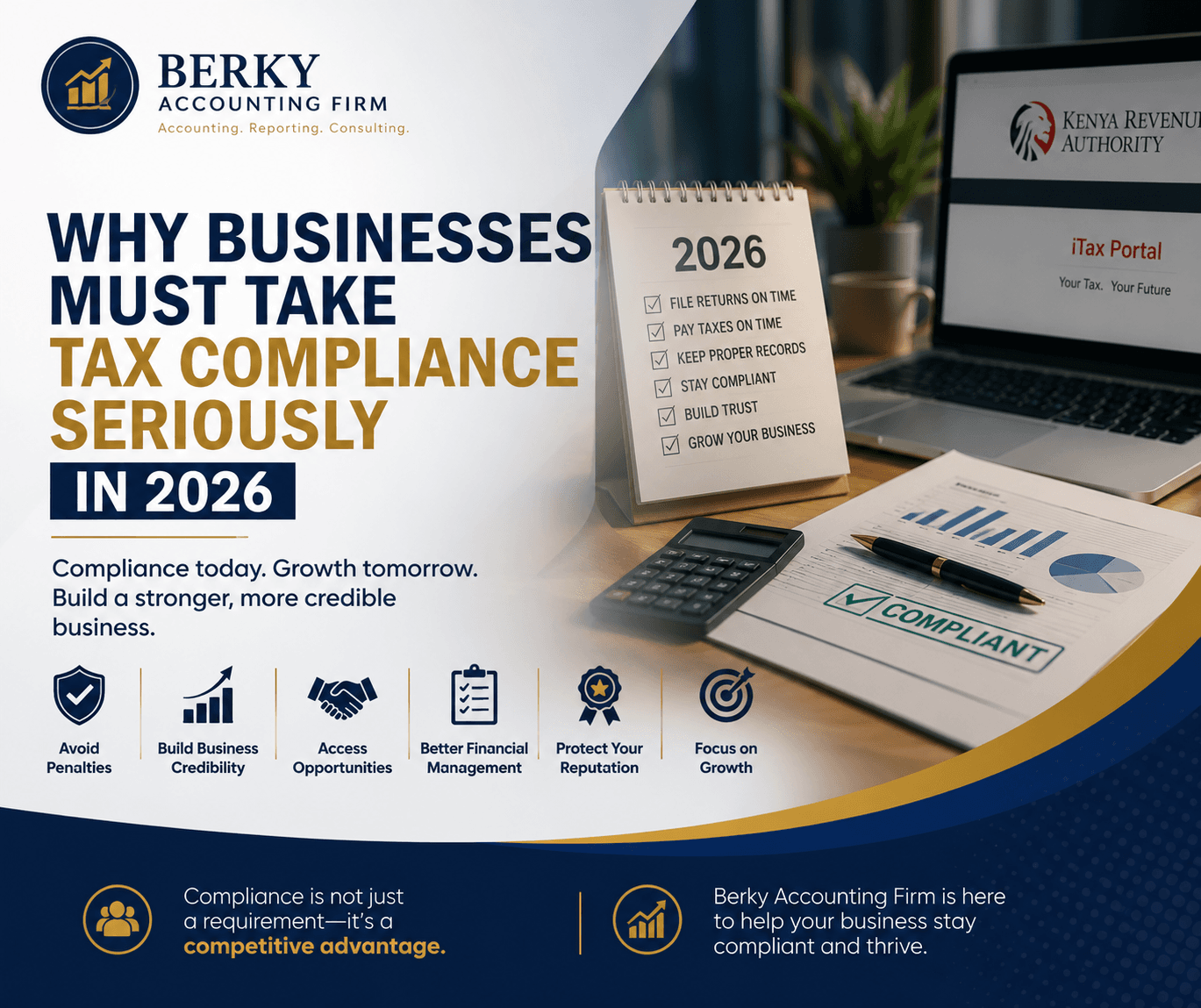
Tax compliance is no longer just a legal requirement—it is a critical business strategy. As Kenya's tax administration continues to become more digital and data-driven, businesses that fail to comply are exposing themselves to significant financial and operational risks.
1. Increased Digital Monitoring by KRA
With the continued adoption of eTIMS, integrated tax systems, and enhanced data analytics, the Kenya Revenue Authority (KRA) can now identify inconsistencies in tax declarations more efficiently than ever before. Businesses that underreport income or fail to file returns accurately are more likely to be flagged for audits and investigations.
2. Costly Penalties and Interest
Late filing, late payment of taxes, and non-compliance with tax obligations attract penalties and interest that can accumulate quickly. These costs can strain cash flow and reduce profitability, especially for small and medium-sized enterprises.
3. Business Growth Requires Compliance
Tax compliance is increasingly becoming a prerequisite for accessing government tenders, financing, grants, and strategic partnerships. Financial institutions and investors often assess a business's tax compliance status before making lending or investment decisions.
4. Better Financial Management
Maintaining proper accounting records and complying with tax obligations promotes financial discipline. Businesses gain a clearer understanding of their financial position, enabling better decision-making and sustainable growth.
5. Protecting Business Reputation
A tax-compliant business demonstrates integrity, transparency, and good governance. This enhances credibility with customers, suppliers, investors, and regulators.
6. Avoiding Business Disruptions
Tax disputes, assessments, and enforcement actions can divert management attention and disrupt normal business operations. Proactive compliance helps businesses focus on growth rather than resolving avoidable tax issues.
The Way Forward
Businesses should review their accounting records regularly, reconcile tax obligations on time, maintain proper documentation, and seek professional tax advice whenever necessary.
In 2026, tax compliance is not merely about avoiding penalties—it is about building a resilient, credible, and sustainable business.
At Berky Accounting Firm, we help businesses navigate tax compliance, accounting, financial reporting, and advisory services to ensure they remain compliant and focused on growth.